


AI for women in GIS: Driving a precise, inclusive Green Economy

The conventional fieldwork element of Geographic Information Systems (GIS) has long served as a structural barrier in the evolving agricultural landscape. Historically, the requirement for physical presence in isolated, remote settings produced a "gatekeeper effect" which disproportionately restricted women's involvement, due to safety concerns. By integrating YOLOv8 deep learning architectures, specifically utilising transfer learning from pre-trained weights on high-resolution multispectral satellite imagery, we are no longer just "using AI"; we are redefining the standard for agricultural inventory. In this framework, accuracy is defined by two critical benchmarks:
● Detection Precision (mAP@50-95): Measured through the Mean Average Precision, ensuring the model distinguishes coconut palms from surrounding tropical canopy with a reliability that exceeds manual counting. This includes rigorous validation against ground-truth datasets to minimise false positives in dense vegetation.
● Physiological Accuracy: Utilising multispectral bands (such as Near-Infrared) to identify sub-visual indicators of plant stress. This provides a diagnostic "truth" via the Normalised Difference Vegetation Index (NDVI) that the human eye cannot perceive during traditional ground-based surveying.
Beyond merely enhancing technical results, this shift to what was formerly known as "GeoAI" is the primary force behind safety and inclusivity. We are eliminating the physical barriers to entry transitioning the professional role from high-risk manual labour to complex geospatial data architecture.
We learned from the transition from "WebGIS" to simply "GIS" that technology eventually becomes so ubiquitous that it loses its name. In our future, "mapping" will inevitably imply an automated, highly accurate, and predictive system that places equal emphasis on data integrity, professional equity, and human safety.
Breaking the Gate: The Shift to Hybrid Workflows
"Eyes in the Sky" represents a radical departure from the traditional "Boots on the Ground" approach. By switching to a hybrid workflow, we are decreasing time spent on-site and replacing high-risk physical labour with high-fidelity digital reconnaissance. Through Earth Observation (EO) platforms such as drones and high-resolution satellites, we can now virtually visit and monitor landscapes with unprecedented ease.
This virtual proximity allows a professional to complete in just two hours what would previously have required two weeks of perilous trekking. The overall efficiency of the spatial industry is bolstered by this shift, as it enables the simultaneous processing of multiple large-scale assets, standardises data outputs for immediate policy implementation, and eliminates the logistical bottlenecks associated with physical site access. By becoming proficient in these technologies, we are not only reducing individual risk but also optimising the industrial throughput of geospatial insights.
The overall efficiency of the spatial industry is bolstered by this shift, as it optimises the industrial throughput of geospatial insights through three primary mechanisms:
Scalability of Human Capital: Makes it possible to process several large-scale assets at once, enabling a single expert to manage enormous areas that were previously unmanageable.
Standardisation of Outputs: Ensures that all stakeholders, regardless of their physical location, have access to the "gold standard" of data by providing consistent data outputs for prompt policy implementation.
Elimination of Logistical Friction: By removing the obstacles brought on by physical site access, inclement weather, and challenging terrain, the industry is able to advance at the speed of digital thought rather than actual travel.
Precision Inventory in the Coconut Sector
Modern agricultural policy is forged in the crucible of the intersection of people and data. My most recent work in the GIS industry demonstrates how contemporary AI is a catalyst for leadership rather than just an efficiency tool. We have transcended physical presence into the domain of digital sovereignty in the vast endeavour of overseeing expansive plantations. Deep learning and drone-captured multispectral data have been combined to enable us to accurately inventory large assets and make proactive crop health diagnoses.
This change is revolutionary for the female GIS practitioner. High-level data orchestration takes the place of conventional monitoring. The unquestionable weight of big data supports a woman's mission when she leads the AI pipeline, guaranteeing that her guidance is not only heard but also adhered to as the gold standard for implementation.
From Data Collector to Data Architect and the use of AI for Women in GIS
The dominant male era of GIS was characterised by the physical surveyor. The women-led era of GIS will be defined by the Geospatial Data Architect. As we evolve from software users to intelligent ecosystem designers, this shift takes place by concentrating on AI-driven tactics, women are escaping the "technician trap", where their roles were frequently restricted to digitising maps, and taking on leadership roles as stewards of national resources. This leadership is demonstrated by particular high-level architectures:
Automated Governance: A Data Architect creates the YOLOv8 pipeline, which monitors thousands of hectares of coconut plantations and provides the "gold standard" of data that directs national agricultural policy, in place of manually counting trees.
Leading Sustainable Initiatives: The physical limitations that formerly determined leadership eligibility in areas such as sustainable carbon sequestration have been removed by technology. A data architect might, for instance, create a system that computes carbon credits using multispectral data; this position necessitates high-level data orchestration rather than on-site presence.
Strategic Resource Management: To move from simple measurement to strategic oversight, architects create predictive models that dynamically optimise infrastructure based on current environmental conditions.
We are reimagining the field to be more intelligent by mastering these technologies, rather than just entering it. This change guarantees that women take the lead in moving from manual data collection to advanced digital sovereignty.

The combination of remote sensing and GeoAI has made the geospatial industry safer, more inclusive, and easier to track. However, if we wish to accelerate this adoption, we need to increase funding for digital advisory tools and policy frameworks that encourage tech-driven land management.
This funding is especially needed for:
Planning Authorities at the national and regional levels: To incorporate GeoAI results into automated governance frameworks that guide environmental and agricultural policy.
NGOs and Agricultural Advisory Services: To give plantation managers and smallholders the digital tools they need to decipher NDVI data and multispectral health diagnostics.
Academic and Private Research Sectors: Supporting the continuous development of specialised YOLOv8 pipelines and GeoAI architectures that tackle regional environmental issues.
Local Land Managers and Farmers: In order to ensure that those on the ground benefit from precise inventory and predictive oversight, local land managers and farmers will receive subsidies for the adoption of tech-driven land management practices.
About the Author
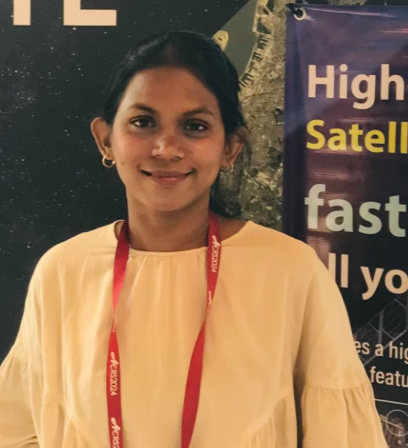
Dilshani Rubasinghe, a geospatial data scientist, is committed to developing the field of spatial intelligence. She specialises in turning manual processes into automated, highly accurate geospatial roadmaps.

Comments